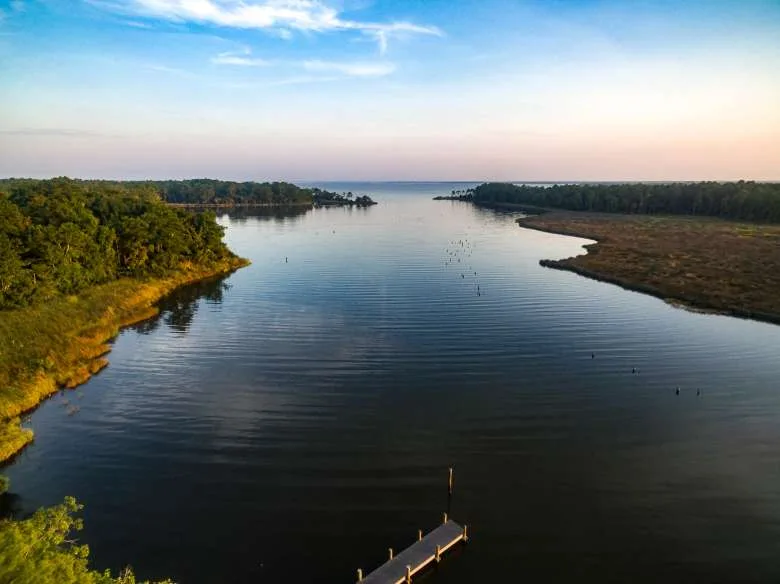
After the Civil War, the Point Washington community mushroomed into a booming sawmill town, with Tucker Bayou serving as the central hub of industry for the town. W.H. Wesley and his father-in-law, Simeon Strickland, saw the fortunes being made in the timber industry and formed the Point Washington Lumber Company, operating several businesses under this entity.
After timber was cut from the company’s property, the pine stumps were dynamited from the ground and this wood processed by a tar plant or retort supervised by one of the Wesley sons. There was also a turpentine still on the property. All of these products were shipped by water on barges or boats down the Choctawhatchee Bay and sold in Pensacola. At the height of their business, the Point Washington Lumber Company had three mills situated on Tucker Bayou.
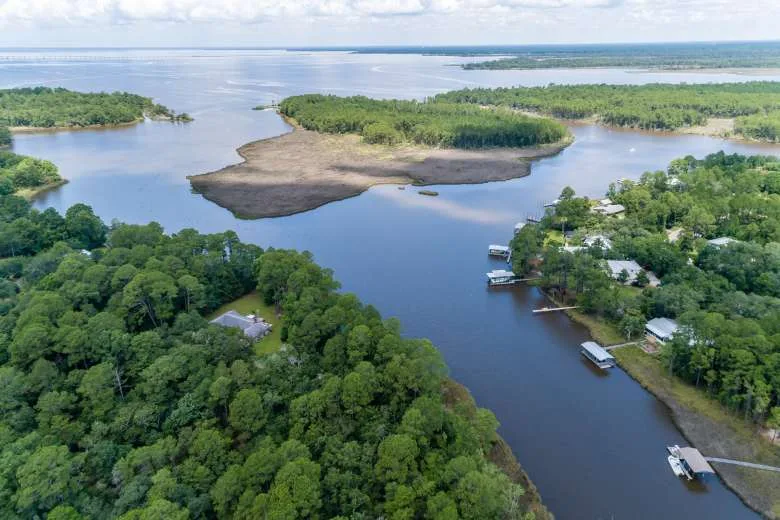
One should also recall that, for the most part, the community of Point Washington remained accessible only by boat along Tucker Bayou, except for those daring enough to attempt automobile travel over the long sand-rutted roads. Most families would have operated their own sailing schooners across Tucker Bayou and the bay to Freeport, the nearest town on the north side of Choctawhatchee Bay, where they would could stock up on essential supplies. This lumber community began to dwindle in the 1920s as the yellow heart pine had been depleted over the course of about 50 years, and the Wesley family suffered several blows to their business, with the mills being burnt out several times by cutthroat competitors.
It’s not widely known that many of the small workers cottages were later transported to Grayton Beach, and some still stand today, to serve as summer homes for vacationers.
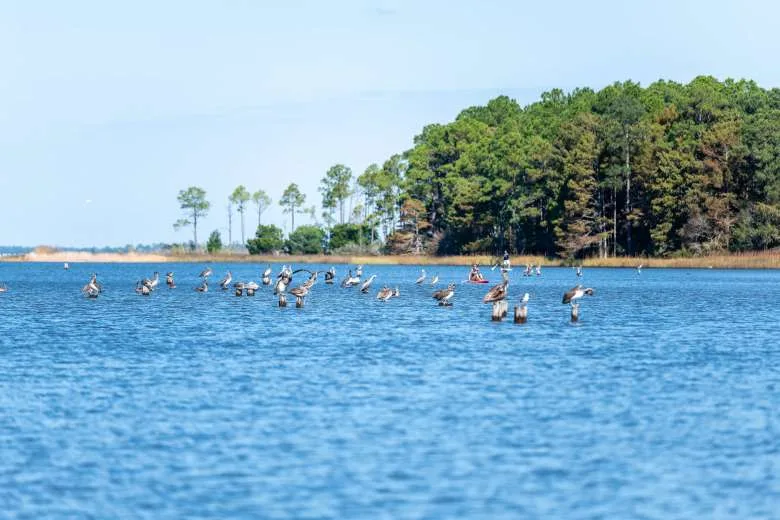
Today, the only remains of that prosperous era are a few old weathered pilings along the shoreline of Tucker Bayou at the Scenic 395 boat ramp and docks at Point Washington Landing. And of course, the Wesley Mansion and Eden Gardens State Park on the shores of Tucker Bayou.


